
Redefining the Pelvic Exam: Pelvic Floor Clinical Foundations Course
(Formerly Beyond the Kegel™)
The simple, in-scope way to integrate pelvic floor assessment into the pelvic exam you already do—and finally connect it to the urinary, bowel, and sexual concerns you see every day.
Everything you need to identify pelvic floor dysfunction, assess tone and motor control, and know what to do next—without leaving your scope or adding time to your visit.
Clear. Practical. Trauma-informed.
When patients come in with pelvic pain, dyspareunia, vaginismus, vulvodynia, constipation, urinary urgency/frequency, IC/BPS, postpartum symptoms, or perimenopause–menopause changes, you are the first clinician they tell.
The Pelvic Exam Is Your First Chance to Change Everything
And yet most clinicians were only taught to:
- Perform a Pap
- Check cervical motion tenderness
- Assess adnexal tenderness
No one taught us that tight pelvic floor muscles and impaired pelvic floor motor control are often the root cause of these symptoms. This course fills that gap.
Understanding the pelvic floor gives you the tools to:
- Make sense of urinary, bowel, and sexual symptoms that don't match the usual workup
- Spot pelvic floor patterns behind pelvic pain, urinary urgency, frequency, and constipation
- Recognize tight pelvic floor muscles and poor motor control—the "missing link" in most evaluations
- Interrupt the pain cycle early instead of sending patients home without answers
- Offer a calm, trauma-informed, pain-free pelvic exam that reduces guarding and fear
- Connect the dots quickly with evidence-based first-line care
When you view the pelvic exam through a pelvic floor lens, patients finally feel validated—and you get them on the right path sooner.
All within your scope, and all without adding extra time to your visit.
Because you address the root cause, patients stop returning with the same unresolved symptoms— saving you time and improving care for your entire panel.
We teach you exactly how to do this, step-by-step, within the pelvic exam you already perform.
If you have pelvic floor PT partners, this training helps you refer sooner and more precisely.
If you don’t, we teach you immediate, in-scope tools you can use in that first visit.
Your pelvic exam is the first line of care.
This course gives you the tools to make your pelvic exam clearer, calmer, and more effective.
Our CE course will be available through 9/15/26.

See the simple pelvic floor exam skills that save you time and help your patients feel better, faster.
This Course is Perfect For:
Healthcare providers who perform pelvic exams, including:
- NPs
- PAs
- MDs
- DOs
- CNMs
- NDs
CE Approvals:
- NPs & CNMs: 8.15 AANP contact hours
- MDs, PAs, DOs: 8.15 Category 2 credits
What You’ll Learn
Module 1: Pelvic floor anatomy—Clear, simple, clinically relevant.
Module 2: Health histories through a pelvic health lens—What to ask, what matters, and why.
Module 3: Exam skills—External GU, bimanual exam, pelvic floor tone + motor control assessment, alignment evaluation.
Module 4: Differential diagnoses—Recognize patterns behind chronic pelvic pain, dyspareunia, vaginismus, vulvodynia, and IC/BPS
Module 5: Patient education that works—Trauma-informed, practical, easy to use in short visits.
Module 6: Real-life case studies—Straight from clinic—what you'll see, and how to help.
What's Included
Why Clinicians Love This Course
I didn’t realize how much I could do in a simple office visit to change my patients’ lives.”
—Cassie Romano, NP, course graduate
“I’m the only NP in my practice. We have one pelvic floor PT in the county—and they don’t do internal exams. This course finally gave me the tools I needed. I’m helping my rural and underserved community—and I’m doing it confidently.”
— Rebekah T., NP in Alabama
Redefining the Pelvic Exam: Pelvic Floor Clinical Foundations Course Overview
(Formerly Beyond the Kegel™)
COURSE INTRODUCTION

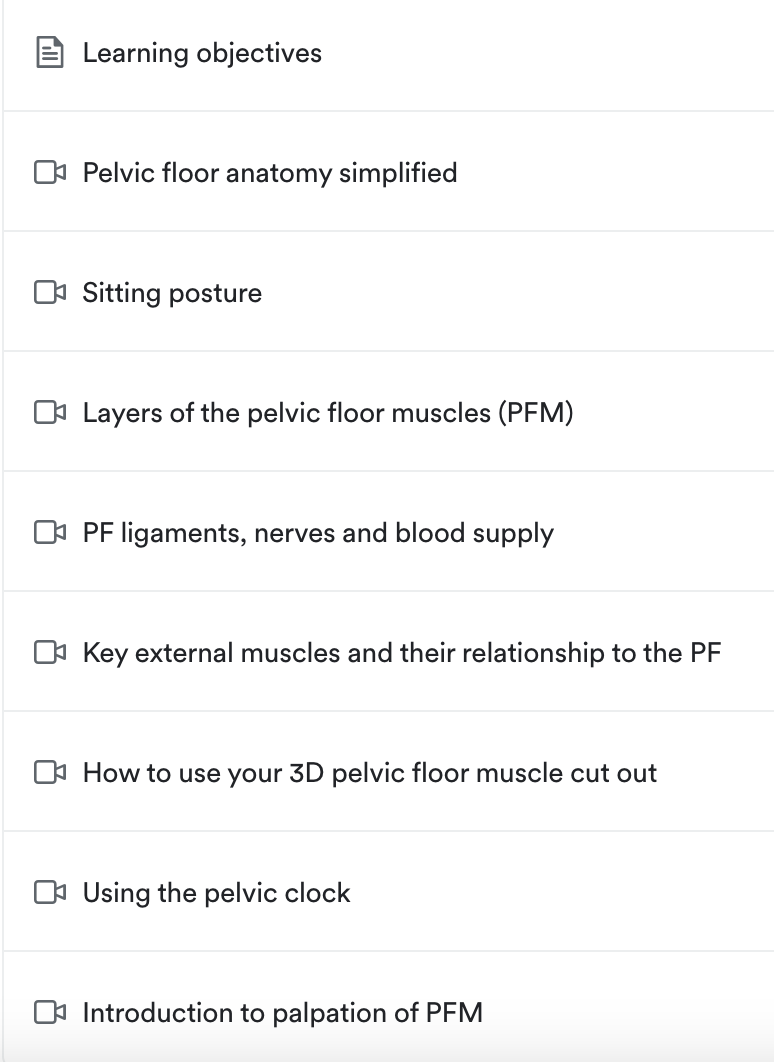
Module 1: Anatomy of the pelvic floor
Module 2: Asking the right questions through a pelvic floor lens

Module 3A: Uplevel your pelvic exam

Module 3B: Diaphragmatic breathing and the PFM

Module 3C: Pelvic alignment assessment

Module 4: Introduction to pelvic pain

Module 5: Patient care plan: At home strategies and education for your patient

Module 6: Bonus Case Studies

Meet your instructors.

Melissa Hines, DPT - Pelvic floor physical therapist and founder of one of Boston’s leading interdisciplinary pelvic health clinics. Melissa has spent her career helping clinicians understand pelvic floor tone and motor control—simply, clearly, and within their scope.
Kathy Kates, FNP - Nurse practitioner, founder of Pelvic Health Support, and breast cancer survivor whose own experience with dyspareunia reshaped her clinical practice. Kathy brings over a decade of women’s health experience and a deep commitment to making pelvic health accessible to every clinician.
Together, we built the first truly interdisciplinary pelvic floor CE course designed for healthcare providers who perform pelvic exams. We bring 25+ years of combined clinical experience—and a shared mission to make the pelvic floor exam clear, practical, and doable for every clinician, in every setting.
Is This Course Right For You?
This training is for you if:
- You perform pelvic exams and want practical pelvic floor skills.
- You want to help patients faster without longer visits.
- You want tools for pelvic pain, dyspareunia, vulvodynia, vaginismus, and IC/BPS.
- You want clarity, confidence, and a system—and you want it all within your scope.
As Kathy’s OBGYN said after taking the course:
"I didn’t realize how much I could do during a simple office visit to change my patients’ lives."
Frequently asked questions
When does the course start and finish?
What does it mean to be a Pelvic Health Certified Clinician™ (PHCC)?
Do you offer continuing education (CE) and continuing medical education (CME) credit and how do I get my credits?
Is there a post-test?
Learn practical, in-scope pelvic floor skills that fit real clinic visits and help your patients faster.
Our CE course will be available through 9/15/26.
ENROLL NOWDo you work in an under-resourced setting?
If you work for a Federally Qualified Health Center, a Rural Health Center, or the Indian Health Service, contact us here for special pricing.
